I chose to watch two videos from the “Learning Science Through Inquiry” website. I watched “Workshop 1:What is Inquiry and Why Do It?” and half of “Workshop7: Assessing Inquiry.” I chose these two videos because I still didn’t really understand what inquiry exactly was, and I was curious as to how to assess students when using inquiry. After watching the first video, I have a little better understanding of what inquiry is. For me, it reinforced what we have been learning in class about the whole inquiry process. In this video, they emphasized that inquiry is a student-generated investigation that starts with student curiosity. This curiosity is activated by some event in nature however, and the role of the teacher is to get students wondering about something. This fits in with the I-AIM model’s first stage, which is engage. As a teacher, you pique students’ curiosity by engaging them in new experiences or drawing on their prior experiences in order for them to pose a question. This also fits in with the EPE Framework (Experiences, Patterns, Explanations) since it uses experiences to generate curiosity. This was seen in the classroom example during a 1st grade inquiry project on sharks. After completing a unit on spiders, students concluded that spiders were misunderstood animals. The teacher noticed that students in her class talked about sharks in the same way as spiders, for example, “They are scary and mean animals.” Students built upon their prior knowledge of spiders being misunderstood animals and wondered if sharks were too. The students kept science folders of their daily questions, discoveries and compositions about the topic, as they began exploring the shark phenomena. Explore is the second stage of the I-AIM Model. The students shared these folders during a “Folder Walk” with their peers and the teacher. This informed the teacher about what the students were wondering and thinking about. For example, one 1st grade girl wondered why shark fins stick out of the water. During this part of the inquiry process, students are also looking for patterns (EPE) in their experiences to formulate hypotheses. For example, some students began to think that sharks are fish. During this exploration, students looked at real-life artifacts provided by the teacher, to further their thinking and generate more questions and ideas. The artifacts helped to keep the investigation authentic and real to students. They talked about their ideas in small groups as they messed around with the materials. This allowed students to develop explanations (EPE and I-AIM) and share them with others based on the evidence in front of them. I saw this in the example classroom when students looked at baby sharks that were preserved in a bottle in groups, to see if what was in front of them was indeed a shark and why. Even though one of the students pointed out the fact that it said “shark” on the bottle, the teacher asked, “Do you always believe what is written?” The student said, “no,” so the teacher said, “well how do we know this to be true then?” This showed me that in inquiry, students try to not only formulate their own explanations based on experiences, but also how they connect evidence (experiences) to explanations. It is very important to learn to ask, “how do we know this is true?” since a lot of what we learn about things is told to us from books, news broadcasts, etc.
I saw a lot of the apply stage of the I-AIM model when watching the video on assessment. This video stressed that it is important to get as many ‘different lenses to look through’ to effectively evaluate a student, since students prefer to express their ideas in various ways (talking, drawing, writing, etc). There are many different ways to go about doing this such as embedded and ongoing assessment, as well as formal assessments where students help to assess one another. I really liked how the 1st grade teacher looked at her students’ journals on a daily basis and their portfolios to track their inquiry process. This shows the teacher if the students understood what they did today as well as inform you on your own teaching performance. The teacher also kept her own journal of what she noticed students were learning and took notes on them. This helped to get to know her students. She decided to share it with her students so that they could receive feedback of their learning since feedback helps you learn. A more formal way of assessing students was to have students create projects of their choice that reflect what they learned through the inquiry process. This required students to apply what they learned to explore and explain real-world examples and to ask more questions about the topic. For example, a third grade group of boys created a bait box project after completing an inquiry on worms. This was a more effective way than unit tests to find out what students know. It is also more engaging for them to develop practical applications of what they learned. It is also more meaningful for students if they help to think of the ways that they will be assessed. For example, when the class created a rubric together. 1st graders even did it with some time and modeling, as shown in the video. One very important thing to keep in mind with assessment is to many sure it is tied to the learning goal. I learned that you should assess in an ongoing way so that you can make sure students are meeting the learning goal throughout the process, because if you wait until the end, it will be too late since you will be moving on to the next thing.
During this whole inquiry process, the students’ role is to be a problem-solver while the teacher is a facilitator. I noticed that throughout both of these videos, the teacher was there to facilitate and guide them by helping them out if they got stuck in their learning. They often did this by asking the student “why?” or give them some new idea to think about. I think it is important to note that the students were the ones making up their own questions, constructing their own knowledge. The teacher encouraged the students to evaluate their ‘thinkings’ critically. They did not just tell them if they were right or wrong, nor give out facts. Instead, teachers just gave students a lot of time to think. I will keep this in mind when I teach.
By watching these videos, it has shown me that inquiry can start at a very young age. I had previously held the misconception that young children can’t do inquiry and that inquiry-based teaching would be too difficult to do with young students, but when in fact most of the examples given in these videos were from a 1st grade class. This has shown me that inquiry can start early, and no matter what grade I end up teaching or how diverse my students are, I can do inquiry with my students. Also, the first grade teacher talked about how she participated in inquiry on her own outside of the classroom. I think this is a good thing that I should try to do as a teacher since if I do it outside of the classroom too, I will be more likely to help foster and use it in my classroom with my students.
One thing is for sure; I will definitely not just teach out of the textbook or lecture to students. After watching these videos, I now know how much more beneficial it is for student learning to have inquiry-based science teaching. Students had real ownership of their learning and assessment during inquiry.
Tuesday, April 29, 2008

Sunday, April 20, 2008
Walk It Out
Field #12
April 15, 2008
This week in field, I did not see any science lesson taught because the students went outside to walk laps around the school instead. My CT is doing some sort of program where she logs how far the class walks each day. I am not sure what it is for exactly, but I will ask next time I go to field. Everyday, if it is nice out, my CT takes her students outside to walk laps around the school. The kids enjoy being outside rather than being stuck inside all day. This little bit of recess seems to help some of the behavior problems in the class because students are able to run outside, so when they come back inside they are tired out. Like I said, I am not sure exactly why my CT has the students walking everyday, but it could fit into science if she turned it into some sort of health lesson (about the need for exercising and eating well), or she could also integrate science into their walks by pointing out things in nature as they encounter things. Right now, they are just walking to walk, with my CT leading the line of single-filed students trying desperately to keep up with her fast pace.
April 15, 2008
This week in field, I did not see any science lesson taught because the students went outside to walk laps around the school instead. My CT is doing some sort of program where she logs how far the class walks each day. I am not sure what it is for exactly, but I will ask next time I go to field. Everyday, if it is nice out, my CT takes her students outside to walk laps around the school. The kids enjoy being outside rather than being stuck inside all day. This little bit of recess seems to help some of the behavior problems in the class because students are able to run outside, so when they come back inside they are tired out. Like I said, I am not sure exactly why my CT has the students walking everyday, but it could fit into science if she turned it into some sort of health lesson (about the need for exercising and eating well), or she could also integrate science into their walks by pointing out things in nature as they encounter things. Right now, they are just walking to walk, with my CT leading the line of single-filed students trying desperately to keep up with her fast pace.
Sunday, April 13, 2008
Class Assignment: Teaching Scenarios
One of the scenarios that I initially said I would not teach was scenario #1: “You, as a teacher, are teaching a unit on space. Each day during the unit you read to the class from a chapter book about the solar system. After reading about a particular planet, you ask students to make a statement on the board for inclusions in a letter sent home to parents at the end of the day.”
I feel that this is just rote learning, having children recall facts from a book. It does not get students actively thinking about the ideas to create meaningful learning. By just recalling facts, it does not tell you whether students are actually learning anything or making meaning. They will most likely forget those facts in a few days anyway. One way to make this activity more inquiry based is to have students ask their own questions of the solar system based on the background information given in the book. Part of inquiry is to not just accept what is told to you as facts, but to ask “how do we know this to be true?” The readings in the book could serve as the spark for children to inquire about the solar system. Through doing this, students may also ask their own further questions and seek to find those answers.
Another scenario that I initially said I would not teach was scenario #20, which stated, “You, as a teacher, decide that the best way to introduce your unit on ecosystems is to define the terms that students need to know such as carnivore, herbivore, and omnivore.”
I do not like this one because I think giving definitions is a terrible way to introduce a unit. It does not engage the students whatsoever or get them excited about what they are about to learn. The first stage in inquiry is to engage, and this definitely does not engage students. Instead, I would find interesting ways to engage students in a study on ecosystems depending on the grade level, perhaps through an exploration field trip to a marsh ecosystem, like we did in SME. I will then allow students to come up with their own questions that they have about the ecosystems, to tailor my unit around student interests. After the field trip, I could then give students a bunch of pictures of animals that were found in the ecosystem and let the students figure out how they might relate to one another. The students will hopefully find patterns and draw their own conclusions about the eating habits of certain animals and their relationship to one another. Giving students formal definitions can be one of the last things to do. This activity is more inquiry-based than the didactic approach proposed in scenario #20 because it engages students, allows them to explore an ecosystem. These are the first two steps in inquiry-based teaching.
I feel that this is just rote learning, having children recall facts from a book. It does not get students actively thinking about the ideas to create meaningful learning. By just recalling facts, it does not tell you whether students are actually learning anything or making meaning. They will most likely forget those facts in a few days anyway. One way to make this activity more inquiry based is to have students ask their own questions of the solar system based on the background information given in the book. Part of inquiry is to not just accept what is told to you as facts, but to ask “how do we know this to be true?” The readings in the book could serve as the spark for children to inquire about the solar system. Through doing this, students may also ask their own further questions and seek to find those answers.
Another scenario that I initially said I would not teach was scenario #20, which stated, “You, as a teacher, decide that the best way to introduce your unit on ecosystems is to define the terms that students need to know such as carnivore, herbivore, and omnivore.”
I do not like this one because I think giving definitions is a terrible way to introduce a unit. It does not engage the students whatsoever or get them excited about what they are about to learn. The first stage in inquiry is to engage, and this definitely does not engage students. Instead, I would find interesting ways to engage students in a study on ecosystems depending on the grade level, perhaps through an exploration field trip to a marsh ecosystem, like we did in SME. I will then allow students to come up with their own questions that they have about the ecosystems, to tailor my unit around student interests. After the field trip, I could then give students a bunch of pictures of animals that were found in the ecosystem and let the students figure out how they might relate to one another. The students will hopefully find patterns and draw their own conclusions about the eating habits of certain animals and their relationship to one another. Giving students formal definitions can be one of the last things to do. This activity is more inquiry-based than the didactic approach proposed in scenario #20 because it engages students, allows them to explore an ecosystem. These are the first two steps in inquiry-based teaching.
Monday, April 7, 2008
Another Spring Break!
Field #11
April 8, 2008
I did not go to the elementary school this week due to the fact that they have spring break this week!
April 8, 2008
I did not go to the elementary school this week due to the fact that they have spring break this week!
Friday, April 4, 2008
Tundra vs. Desert vs. Michigan
Field 10
April 3, 2008
Today I taught my social studies lesson instead of doing science. My lesson did tie into science because although it was a geography lesson, we talked about the different animals and weather than could be found in the desert, tundra, and Michigan as well as where the regions were found in the United States and what kinds of activities people did there. Overall, it was a compare and contrast of these regions. I thought that this lesson went very well, and my CT thought so too! She gave us very positive feedback after the lesson and really liked how we fed off one another with our lessons, and how we tied them together. My partner taught the first part of the lesson, on the desert, and then I continued the lesson immediately after to teach about the tundra (or basically Alaska since that is the only place in the United States with this type of region.) After reading them a book on each of these places, we had a discussion of what types of things they remember about the tundra from the book. I recorded these on a white board. The students loved to focus on the types of animals found there, so I had to also steer them in the direction of “what kinds of activities do people do there?” or “well you mentioned that it was very cold there, then what kinds of clothes do you think you would have to wear in the tundra?” (Just to keep the social studies focus a little.) I think that the students did learn a lot from my lesson in both a science and social studies way. Thinking back, this lesson could have really been an integrative lesson, where science, social studies, and language arts were integrated into one lesson, since we I read them a book and we had a discussion (language arts), talked about where the tundra is located in the United States and how people live there (social studies), and also the climate and animals found in the regions (science). Overall, I enjoyed teaching both my science lesson last week and my social studies lesson this week. I can’t wait to teach more of them next year to get even more practice. For right now, I am very relieved to have both of them finished, and right now, I am counting down the days until the end of the semester! Only 2 more weeks in the field!!
April 3, 2008
Today I taught my social studies lesson instead of doing science. My lesson did tie into science because although it was a geography lesson, we talked about the different animals and weather than could be found in the desert, tundra, and Michigan as well as where the regions were found in the United States and what kinds of activities people did there. Overall, it was a compare and contrast of these regions. I thought that this lesson went very well, and my CT thought so too! She gave us very positive feedback after the lesson and really liked how we fed off one another with our lessons, and how we tied them together. My partner taught the first part of the lesson, on the desert, and then I continued the lesson immediately after to teach about the tundra (or basically Alaska since that is the only place in the United States with this type of region.) After reading them a book on each of these places, we had a discussion of what types of things they remember about the tundra from the book. I recorded these on a white board. The students loved to focus on the types of animals found there, so I had to also steer them in the direction of “what kinds of activities do people do there?” or “well you mentioned that it was very cold there, then what kinds of clothes do you think you would have to wear in the tundra?” (Just to keep the social studies focus a little.) I think that the students did learn a lot from my lesson in both a science and social studies way. Thinking back, this lesson could have really been an integrative lesson, where science, social studies, and language arts were integrated into one lesson, since we I read them a book and we had a discussion (language arts), talked about where the tundra is located in the United States and how people live there (social studies), and also the climate and animals found in the regions (science). Overall, I enjoyed teaching both my science lesson last week and my social studies lesson this week. I can’t wait to teach more of them next year to get even more practice. For right now, I am very relieved to have both of them finished, and right now, I am counting down the days until the end of the semester! Only 2 more weeks in the field!!
My Science Lesson!
Field #9
March 25, 2008
 Today I taught my science lesson to the whole kindergarten class! It followed Carly’s lesson on “what a plant needs.” My lesson was about how plants change as they grow. I feel like my lesson went pretty well, but it definitely could have been better as far as classroom management. This is probably one of my greatest weaknesses so far as a student teacher. Hopefully I will be able to improve on this next year when I have more control of the class on a regular basis, rather than one day per week.
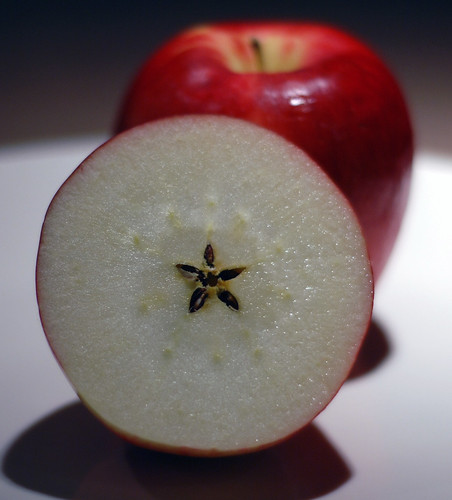
I modified my lesson a little bit after not being able to find the original book that I wanted to use for this lesson entitled The Big Seed. While looking for a different book to use, I thought back to my Science Talk and how some of my students held the misconception that if you give seeds apple juice, they will turn into apple trees. While at the public library, I found a book entitled How Do Apples Grow? By Betsey Maestro. I thought that this was a very appropriate book for my students and for my lesson, so I used this book instead. It went through the life cycle of an apple tree, while also talking about the different parts of the plant and what they do as the plant changes. At one point in the book, it shows us that if you cut the apple in half, you can see the seeds inside in the shape of a star. I paused at that page and brought out an apple I brought to show the students this is real-life. They were really interested in this as they passed the apple around. I think now their misconception is hopefully fixed!
March 25, 2008
 Today I taught my science lesson to the whole kindergarten class! It followed Carly’s lesson on “what a plant needs.” My lesson was about how plants change as they grow. I feel like my lesson went pretty well, but it definitely could have been better as far as classroom management. This is probably one of my greatest weaknesses so far as a student teacher. Hopefully I will be able to improve on this next year when I have more control of the class on a regular basis, rather than one day per week.
 I modified my lesson a little bit after not being able to find the original book that I wanted to use for this lesson entitled The Big Seed. While looking for a different book to use, I thought back to my Science Talk and how some of my students held the misconception that if you give seeds apple juice, they will turn into apple trees. While at the public library, I found a book entitled How Do Apples Grow? By Betsey Maestro. I thought that this was a very appropriate book for my students and for my lesson, so I used this book instead. It went through the life cycle of an apple tree, while also talking about the different parts of the plant and what they do as the plant changes. At one point in the book, it shows us that if you cut the apple in half, you can see the seeds inside in the shape of a star. I paused at that page and brought out an apple I brought to show the students this is real-life. They were really interested in this as they passed the apple around. I think now their misconception is hopefully fixed!
Reflections on Small Group Presentations
Reflections on Small Group Presentations
(From in-class activity on March 24)
I liked how we were to apply what we know about teaching science to create a lesson plan to teach our class on the articles. I liked the presentations that didn’t just make a PowerPoint of the facts and theories presented in the article, but rather those that taught us through something else, such as an activity. I was definitely more engaged in the activity ones more than the lecture presentations. I already read the articles, so I thought it was boring and just pointless to be lectured about them again by a group, especially the Inquiry at the Window article since I read it at home, created a lesson to teach the class about it in class, and then had to listen to it AGAIN from another group. It was interesting to see though how two different groups could teach the same thing in different ways. I think I would have liked it better if we just had two groups, so that we wouldn’t have had to listen to the same thing twice, but by doing it this way, it shows us that there are many different ways to go about teaching something, some more engaging than others. I think that you chose to do this activity today to show us just this. We have been talking all semester about how to get students engaged through inquiry, and this activity was to see if we could apply what we knew about it, to teach our fellow classmates. I think some groups definitely did a better job of this than others. The reason you had us to this during class time was because as teachers, sometimes we do not have a lot of time to plan a lesson for various reasons. This activity was an example of how to prepare and use what you have to create the best lesson possible in the limited amount of time that we had.
(From in-class activity on March 24)
I liked how we were to apply what we know about teaching science to create a lesson plan to teach our class on the articles. I liked the presentations that didn’t just make a PowerPoint of the facts and theories presented in the article, but rather those that taught us through something else, such as an activity. I was definitely more engaged in the activity ones more than the lecture presentations. I already read the articles, so I thought it was boring and just pointless to be lectured about them again by a group, especially the Inquiry at the Window article since I read it at home, created a lesson to teach the class about it in class, and then had to listen to it AGAIN from another group. It was interesting to see though how two different groups could teach the same thing in different ways. I think I would have liked it better if we just had two groups, so that we wouldn’t have had to listen to the same thing twice, but by doing it this way, it shows us that there are many different ways to go about teaching something, some more engaging than others. I think that you chose to do this activity today to show us just this. We have been talking all semester about how to get students engaged through inquiry, and this activity was to see if we could apply what we knew about it, to teach our fellow classmates. I think some groups definitely did a better job of this than others. The reason you had us to this during class time was because as teachers, sometimes we do not have a lot of time to plan a lesson for various reasons. This activity was an example of how to prepare and use what you have to create the best lesson possible in the limited amount of time that we had.
Thursday, March 20, 2008
Back in the field!
Field #8
March 18, 2008
Today was my first day back in the field since before spring break. It seemed like I haven't been there in forever!
I did not observe any science today due to the fact that the classes did not switch, since one of the kindergarten teachers had a substitute. Christina still did her science lesson today, but instead of doing it to my class as we had planned, she did it to her class. Next week, Carly and I are doing our lessons to our class. Both Carly’s and my lessons build upon Christina’s lesson, since Christina taught parts of a plant. Carly will be teaching “what plants need,” and I will be teaching about “how plants change as they grow.” I am wondering how this will affect the effectiveness of our lessons now. I guess students do not need to know the parts of a plant in order to learn what it needs, but they will need to understand the parts of a plant to learn about how they change. Should I do a brief lesson on the parts of a plant before I go about talking how they change as they grow, or should I just incorporate the parts into my lesson and introduce them as they are formed in the life cycle? I am still working on how I should put my lesson together, but I am thinking I should go with the latter.
During the time that my class usually experiences science, my CT did a short social studies lesson on water landforms. This is geography, but I also feel like it has to do with science as well. For this lesson, my CT used her social studies big book, and showed the students pictures of rivers, lakes, oceans, and ponds to explain the difference between them. The students sat on the carpet in front of her as she explained and asked students questions such as “How do you think a lake and a river are different?” It was a really short lesson that only lasted about 15 minutes. This was the first time I observed social studies in my kindergarten classroom, and I know that it might not always be like this, but I was bored watching it. I am very interested to see what other kinds of social studies lessons are implemented, other than using the Houghton Mifflin big book and just talking about it. No wonder a lot of students think social studies is boring. I think that there needs to be more student involvement and inquiry, rather than just talking and lecturing. This is something we have spent the semester talking about in TE 402 Science.Wednesday, March 12, 2008
No School!
Field #7
March 11, 2008
There was no school today due to a professional development day. I will be back in the classroom next Tuesday!
March 11, 2008
There was no school today due to a professional development day. I will be back in the classroom next Tuesday!
Thursday, February 28, 2008
Science Talk
 Field #6
February 26, 2008
Today I did my science talk with the whole class during science time. Overall, it went pretty well and students generated some concepts and ideas that we will definitely touch on in our three lessons. My particular lesson ties Christina’s and Carly’s lessons together. Christina’s lesson is on parts of a plant, Carly’s lesson is on what plants need, and mine will be on how plants grow and change. During the science talk, we asked students the question, “How do you think plants grow?” We had hoped students would mention parts of the plant (i.e. Starts as a seed), what it needs in order to grow (i.e. Sunlight, water, etc) and how it changes (grows a stem, and then leaves, etc) all by answering this one question. Students did a good job explaining what they already know, even though some were misconceptions. One student thought that you needed to plant an apple seed and give it apple juice in order for it to grow into an apple tree. Many other students agreed with this. Carly will have to address this in her lesson on what plants need. This science talk was a useful activity to do so that now we, as teachers, know what needs to be addressed more in our lessons. I never thought about doing this before, and probably wouldn’t have if it weren’t an assignment for this class. After doing a science talk and experiencing how easy and informal something can be as a pre-assessment, I plan on doing this in the future when I have a classroom in order to better address what exactly my students need to know about a topic based on what they already know.
Sunday, February 17, 2008
You Can't Catch Me....
Field #5
February 12, 2008
We did not do any formal science lesson today, but the students did spend time making their Valentine’s Day boxes out of recycled cereal boxes, just as my CT told them 2 weeks ago. The teacher and I ripped off the tops of the boxes so that it would be easy for students to go around and put their valentines in during the party. Students spent time decorating their boxes with construction paper hearts that they glued on.
Although we didn’t do much with science, there was a big activity than took up most of the afternoon that really engaged students. Most of the day was spent doing “The Gingerbread Man” activities. I especially liked how the day was organized around 1 or 2 common ideas. It seemed like today was organized around 2 “Big Ideas:” Valentine’s Day and “The Gingerbread Man.” This is similar to what we have been talking about in TE 402 about big ideas in science: have a big idea that resonates throughout many different lessons. For this particular lesson, in the morning, my CT read the students a different version of The Gingerbread Man called The Gingerbread Baby. For the past couple of weeks, she has read the class different versions of this classic tale to the students and they have been looking for similarities and differences between them. After lunch, during the time when the classes usually switch for social studies and science, both kindergarten classes read The Gingerbread Man again. This time, a paper gingerbread man cutout fell from inside the book onto the floor with a note that said “You can’t catch me, I’m in the gym!” This started a chase for the gingerbread man. Both kindergarten classes were told to be quiet in the halls or else we might scare him off. Students knew that he was quick from the stories that they read, and every time we got to where the last note said he was, we were either too slow or too loud and he ran away, but left us another note telling us where he was at. We went all over the school: in the gym, to the library, the computer lab, the office and back to the classroom where the students found some crumbs near an open window. Looking out the window, you could see a gingerbread man atop the snow pile outside. He was just too fast for us. We couldn’t catch him because he’s the gingerbread man, the teacher said. All the students wanted to grab their coats and try to catch him, but then the teacher called their attention to the bags of gingerbread cookies that he left for the class and they were quickly distracted with eating. We then did a math lesson in graphing with the cookies. Each student took 1 bite out of the cookie and then had to graph what part of the cookie they ate first: the head, an arm, or a leg. We found that most students bit the head off first. I really liked how one big idea of the gingerbread man could include a literacy lesson as well as a math lesson.
February 12, 2008
We did not do any formal science lesson today, but the students did spend time making their Valentine’s Day boxes out of recycled cereal boxes, just as my CT told them 2 weeks ago. The teacher and I ripped off the tops of the boxes so that it would be easy for students to go around and put their valentines in during the party. Students spent time decorating their boxes with construction paper hearts that they glued on.
Although we didn’t do much with science, there was a big activity than took up most of the afternoon that really engaged students. Most of the day was spent doing “The Gingerbread Man” activities. I especially liked how the day was organized around 1 or 2 common ideas. It seemed like today was organized around 2 “Big Ideas:” Valentine’s Day and “The Gingerbread Man.” This is similar to what we have been talking about in TE 402 about big ideas in science: have a big idea that resonates throughout many different lessons. For this particular lesson, in the morning, my CT read the students a different version of The Gingerbread Man called The Gingerbread Baby. For the past couple of weeks, she has read the class different versions of this classic tale to the students and they have been looking for similarities and differences between them. After lunch, during the time when the classes usually switch for social studies and science, both kindergarten classes read The Gingerbread Man again. This time, a paper gingerbread man cutout fell from inside the book onto the floor with a note that said “You can’t catch me, I’m in the gym!” This started a chase for the gingerbread man. Both kindergarten classes were told to be quiet in the halls or else we might scare him off. Students knew that he was quick from the stories that they read, and every time we got to where the last note said he was, we were either too slow or too loud and he ran away, but left us another note telling us where he was at. We went all over the school: in the gym, to the library, the computer lab, the office and back to the classroom where the students found some crumbs near an open window. Looking out the window, you could see a gingerbread man atop the snow pile outside. He was just too fast for us. We couldn’t catch him because he’s the gingerbread man, the teacher said. All the students wanted to grab their coats and try to catch him, but then the teacher called their attention to the bags of gingerbread cookies that he left for the class and they were quickly distracted with eating. We then did a math lesson in graphing with the cookies. Each student took 1 bite out of the cookie and then had to graph what part of the cookie they ate first: the head, an arm, or a leg. We found that most students bit the head off first. I really liked how one big idea of the gingerbread man could include a literacy lesson as well as a math lesson.
Sunday, February 10, 2008
Use Your Senses!
Field #4
February 5, 2008
This week at my field placement my CT didn’t have anything planned for science, but she did an awesome job thinking of an activity for the students to do on the spot. Since the current unit is “sorting,” she asked the students how could you sort things using your 5 senses? The students then generated the 5 senses on the board- see, smell, hear, taste and touch. The activity students were assigned to do was to find an example of something for each of the senses. For example, something you could smell. Students cut pictures out of old magazines and glued them onto construction paper. I went around and asked students which of the 5 senses each picture represented and wrote the word “see, smell, taste, hear or touch” under the picture.
I liked this activity because it gave students an opportunity to analyze and think about what sense they might use on certain real-world objects in pictures. Since we are still learning about the Michigan Curriculum Benchmarks in TE 402, I once again looked at the benchmarks to see how this lesson might fit in. The USING benchmark that fits in with this lesson is SCI.IV.1.E.1- Classify common objects and substances according to observable attributes/properties. Students are classifying (sorting) pictures of objects into one of the 5 senses as an example of a property that they can observe using that sense.
I think that introducing the 5 senses into the sorting unit is a great idea because then you can build on this lesson from just finding an example to actually sorting real objects using the 5 senses. I remember back in elementary school when I learned about the 5 senses. We had to try to figure out what object was in the box or bag by using our senses other than see. I could shake the box to hear what sound the object made, smell the object, touch it with my eyes closed, or sometimes taste it. Based on these observations, I had to develop a conclusion as to what object was in the bag or box. This is an example of a CONSTRUCTING benchmark for elementary students: SCI.I.1.E.2-Develop solutions to problems through reasoning, observation, and investigations. I think students would really be engaged in this type of hands-on, minds-on learning activity. I know I did when I was their age.
February 5, 2008
This week at my field placement my CT didn’t have anything planned for science, but she did an awesome job thinking of an activity for the students to do on the spot. Since the current unit is “sorting,” she asked the students how could you sort things using your 5 senses? The students then generated the 5 senses on the board- see, smell, hear, taste and touch. The activity students were assigned to do was to find an example of something for each of the senses. For example, something you could smell. Students cut pictures out of old magazines and glued them onto construction paper. I went around and asked students which of the 5 senses each picture represented and wrote the word “see, smell, taste, hear or touch” under the picture.
I liked this activity because it gave students an opportunity to analyze and think about what sense they might use on certain real-world objects in pictures. Since we are still learning about the Michigan Curriculum Benchmarks in TE 402, I once again looked at the benchmarks to see how this lesson might fit in. The USING benchmark that fits in with this lesson is SCI.IV.1.E.1- Classify common objects and substances according to observable attributes/properties. Students are classifying (sorting) pictures of objects into one of the 5 senses as an example of a property that they can observe using that sense.
I think that introducing the 5 senses into the sorting unit is a great idea because then you can build on this lesson from just finding an example to actually sorting real objects using the 5 senses. I remember back in elementary school when I learned about the 5 senses. We had to try to figure out what object was in the box or bag by using our senses other than see. I could shake the box to hear what sound the object made, smell the object, touch it with my eyes closed, or sometimes taste it. Based on these observations, I had to develop a conclusion as to what object was in the bag or box. This is an example of a CONSTRUCTING benchmark for elementary students: SCI.I.1.E.2-Develop solutions to problems through reasoning, observation, and investigations. I think students would really be engaged in this type of hands-on, minds-on learning activity. I know I did when I was their age.
Questions for Inquiry
Questions are important in order for good teaching and inquiry to take place. Good questions get students interested and excited in whatever you are teaching. A good question needs to be engaging and makes students motivated to learn more about the topic and find out the possible answers to the question. For example, if we were to develop possible questions for benchmark SCI.III.4.E.1 about fossils they could be "How do we know dinosaurs existed?" or "How do we know what a pteradactyl looked like?"
Light and Shadows
In your own words, what would you like to see a student do that would tell you that this student understabds each benchmark? What would it look like if a student was using this knowledge to accomplish this task in this context?
I would like a student to use a specific example (such as shadow puppets) to explain to me how the shadows are made and why the shadows get larger or smaller depending on the distance from the light source. I would like the student to explain this by using evidence supplied by their demonstration. By demonstrating and explaining, this will show me that the student uses direct evidence to explain how shadows are made.
I would like a student to use a specific example (such as shadow puppets) to explain to me how the shadows are made and why the shadows get larger or smaller depending on the distance from the light source. I would like the student to explain this by using evidence supplied by their demonstration. By demonstrating and explaining, this will show me that the student uses direct evidence to explain how shadows are made.
Monday, February 4, 2008
Reduce, Reuse, Recycle
Field Experience #3
January 29, 2008

January 29, 2008

This week at my field placement, we talked about recycling and re-using in science. I really liked how the teacher used real-world examples to teach this lesson. She brought in her recycling bin from home with recyclable materials, and also used the Granger paper bin, a plastic grocery store bag, and a trash can for her lesson. The students learned what type of materials should go in each. The teacher passed around the objects and the students looked for the recycle symbol to see if it was recyclable or not. They then decided as a class which bin the object would best fit.
After becoming acquainted with the Michigan Curriculum Science Benchmarks last week in class, I was curious to see if I could find out which benchmark this lesson that corresponded to. After browsing through the benchmarks, I eventually found SCI.V.I.E6: Demonstrate ways to conserve natural resources and reduce pollution through reduction, reuse, and recycling of manufactured materials. The key concepts included materials that can be recycled. Real world contexts include collection of recyclable materials, plans for recycling at home and school, and ways of reusing and reducing the use of paper.
I definitely saw how this lesson was organized around this particular benchmark. For example, the teacher talked about the different materials that are recyclable and which are not. She showed them the symbol to look for on recyclable materials and talked about which container the material should go in: the recycle bin, the Granger box, the grocery store bag (for pop cans and bottles that you can get your deposit back on) or the trash can. The asked the students if they were going to help their parents at home with recycling and they all said “yes!” She also told them that since they all now know what materials go in each box, that recycling and reusing are in full force in the classroom, and if they are unsure of where to put something, they are to ask a classmate. This was their plans for recycling at home and school. She also briefly talked about reusing, but I think it will be covered more in-depth in a later lesson. The plastic grocery bag was an example of reusing, since she said it could be reused to carry your returnable cans and bottles back to the grocery store. The students also discussed other uses for the grocery bags such as garbage can liners or containers for their school lunches. They also discussed how newspapers are reused to make new paper. The students saw how this happens in a video they watched the previous day. The teacher left the students excited for future lessons when she told them that they are going to reuse newspapers to make celebration hats for their 100th Day Celebration that is coming up soon, and reusing the caps of milk jugs and attaching sponges on the back to paint their hats. I like this because this means that recycling and reusing aren’t just going to be concepts that are taught once, but rather used in the classroom on a regular basis. The teacher ended the lesson by reading the class Reduce, Reuse, Recycle. I think this was a good way to settle the students back down and bring together everything they talked about in the day’s lesson.
After becoming acquainted with the Michigan Curriculum Science Benchmarks last week in class, I was curious to see if I could find out which benchmark this lesson that corresponded to. After browsing through the benchmarks, I eventually found SCI.V.I.E6: Demonstrate ways to conserve natural resources and reduce pollution through reduction, reuse, and recycling of manufactured materials. The key concepts included materials that can be recycled. Real world contexts include collection of recyclable materials, plans for recycling at home and school, and ways of reusing and reducing the use of paper.
I definitely saw how this lesson was organized around this particular benchmark. For example, the teacher talked about the different materials that are recyclable and which are not. She showed them the symbol to look for on recyclable materials and talked about which container the material should go in: the recycle bin, the Granger box, the grocery store bag (for pop cans and bottles that you can get your deposit back on) or the trash can. The asked the students if they were going to help their parents at home with recycling and they all said “yes!” She also told them that since they all now know what materials go in each box, that recycling and reusing are in full force in the classroom, and if they are unsure of where to put something, they are to ask a classmate. This was their plans for recycling at home and school. She also briefly talked about reusing, but I think it will be covered more in-depth in a later lesson. The plastic grocery bag was an example of reusing, since she said it could be reused to carry your returnable cans and bottles back to the grocery store. The students also discussed other uses for the grocery bags such as garbage can liners or containers for their school lunches. They also discussed how newspapers are reused to make new paper. The students saw how this happens in a video they watched the previous day. The teacher left the students excited for future lessons when she told them that they are going to reuse newspapers to make celebration hats for their 100th Day Celebration that is coming up soon, and reusing the caps of milk jugs and attaching sponges on the back to paint their hats. I like this because this means that recycling and reusing aren’t just going to be concepts that are taught once, but rather used in the classroom on a regular basis. The teacher ended the lesson by reading the class Reduce, Reuse, Recycle. I think this was a good way to settle the students back down and bring together everything they talked about in the day’s lesson.
Sunday, January 27, 2008
Playing with Sand
Field Placement #2
January 22, 2008
I observed my first science lesson today for the recycling unit. It was about “sorting.” The lesson only lasted 20 minutes, and I now know what my CT was talking about when she told me her lessons are brief due to the class’s attention spans. The class was very attentive at first, when my CT pulled out her white lab coat, probably because they knew that meant they were going to get to do an experiment. This experiment involved the sand table and a handful of magnetic letters. My CT asked the class what tools they could use from their science kit that would allow them to sort out the letters from the sand. The students immediately picked the strainer, but didn’t realize they could use magnets as well since the letters were magnetic. My CT then told the class that you could use magnets as well, without really letting the students draw this conclusion on their own. I would have probably done this differently and would have tried to scaffold the students more and allow them to reach their own conclusion as to using the magnets by asking them “What else could we use?” and ask them to pay attention to the properties of the letters. I would put a letter on something magnetic, so that they could see its properties. I don’t think many students even knew that the letters were magnetic to begin with, so they didn’t think to use magnets to sort them out from the sand. My CT demonstrated to the class how to use both tools to sort, and then had students come up to the sand table, two at a time, and try for themselves. This is when students began to lose interest-while they were waiting for their turn, and after they went. After they had their turn, they began goofing off with their peers and stand up to look out the window, etc. I feel like there should have been something to do for the students who were waiting for their turn, so that they would still be thinking about the idea of sorting, rather than goofing off with their peers. Despite this, overall I think that this lesson was engaging for the students since they seem to enjoy working with the sand table. I am wondering though if this is a full science lesson? When I think about science lessons, I usually think of something more than just showing students how to sort. Maybe also talk about why we would need to sort things, etc? I am still getting used to how short lessons are in kindergarten and am a little concerned for when I will have to teach a lesson.
January 22, 2008
I observed my first science lesson today for the recycling unit. It was about “sorting.” The lesson only lasted 20 minutes, and I now know what my CT was talking about when she told me her lessons are brief due to the class’s attention spans. The class was very attentive at first, when my CT pulled out her white lab coat, probably because they knew that meant they were going to get to do an experiment. This experiment involved the sand table and a handful of magnetic letters. My CT asked the class what tools they could use from their science kit that would allow them to sort out the letters from the sand. The students immediately picked the strainer, but didn’t realize they could use magnets as well since the letters were magnetic. My CT then told the class that you could use magnets as well, without really letting the students draw this conclusion on their own. I would have probably done this differently and would have tried to scaffold the students more and allow them to reach their own conclusion as to using the magnets by asking them “What else could we use?” and ask them to pay attention to the properties of the letters. I would put a letter on something magnetic, so that they could see its properties. I don’t think many students even knew that the letters were magnetic to begin with, so they didn’t think to use magnets to sort them out from the sand. My CT demonstrated to the class how to use both tools to sort, and then had students come up to the sand table, two at a time, and try for themselves. This is when students began to lose interest-while they were waiting for their turn, and after they went. After they had their turn, they began goofing off with their peers and stand up to look out the window, etc. I feel like there should have been something to do for the students who were waiting for their turn, so that they would still be thinking about the idea of sorting, rather than goofing off with their peers. Despite this, overall I think that this lesson was engaging for the students since they seem to enjoy working with the sand table. I am wondering though if this is a full science lesson? When I think about science lessons, I usually think of something more than just showing students how to sort. Maybe also talk about why we would need to sort things, etc? I am still getting used to how short lessons are in kindergarten and am a little concerned for when I will have to teach a lesson.
Monday, January 21, 2008
Back to the Classroom!
Field #1: January 17,2008
Today was my first day back in the field since before Christmas and it felt good to be back. It was comforting to go back to the same kindergarten classroom where you know the teacher, all of the students, the norms of the classroom, classroom procedures, etc. The students were very excited to see me, which made me feel great to be back. I feel as if maybe I do make a difference in some of their lives just by being there.
I talked to my CT and the other kindergarten teacher regarding the science and social studies schedules for the rest of the semester, and I found out that the two kindergarten classes switch in the afternoon, four days a week, for either science or social studies. My CT teaches social studies, and the other one teachers science. My class does science Mondays and Tuesdays from 1:30-2pm and social studies on Wednesdays and Thursdays from 1:30-2pm. I found this interesting because it seems as if these two subjects are regarded as the least important, at least at this grade level, since both are only done 1 hour a week. Literacy and math are more heavily focused on at this grade level, probably because learning the alphabet along with some phonics, and counting are very basic fundamental concepts that must be started at this age. Although I totally agree that literacy and math are very important, I think that it would be beneficial to have a little more time devoted each week to science. After doing the Classroom Science Survey, I found out that the kindergarten teacher who teaches science does not really like science! (She told me this.) I am wondering how this will reflect in her teaching of science…I am curious to see.
It probably doesn’t help that the curriculum she is given is devised by the district and seems very thin. It was only one small binder of materials, compared to the numerous materials given for Language Arts and Math. Is this the districts way of saying that science is not important for kindergarten? The teacher is responsible for gathering any additional materials that they want to use for science, however since the teacher doesn’t seem to have an interest in it, she doesn’t seem to have much besides videos that the students watch. There is only three units for the whole school year, which include:
1. Weather
2. Recycling
3. Animals
I am wondering what other kindergarten classes in other school districts have for science.
Are all schools this way? From what I remember from my experiences in kindergarten, I remember a more hands-on approach: playing with a water tank, a sand box, bubbles, going outside, etc., not videos. I guess I'll just have to wait and see what happens in this classroom the rest of the semester!
Today was my first day back in the field since before Christmas and it felt good to be back. It was comforting to go back to the same kindergarten classroom where you know the teacher, all of the students, the norms of the classroom, classroom procedures, etc. The students were very excited to see me, which made me feel great to be back. I feel as if maybe I do make a difference in some of their lives just by being there.
I talked to my CT and the other kindergarten teacher regarding the science and social studies schedules for the rest of the semester, and I found out that the two kindergarten classes switch in the afternoon, four days a week, for either science or social studies. My CT teaches social studies, and the other one teachers science. My class does science Mondays and Tuesdays from 1:30-2pm and social studies on Wednesdays and Thursdays from 1:30-2pm. I found this interesting because it seems as if these two subjects are regarded as the least important, at least at this grade level, since both are only done 1 hour a week. Literacy and math are more heavily focused on at this grade level, probably because learning the alphabet along with some phonics, and counting are very basic fundamental concepts that must be started at this age. Although I totally agree that literacy and math are very important, I think that it would be beneficial to have a little more time devoted each week to science. After doing the Classroom Science Survey, I found out that the kindergarten teacher who teaches science does not really like science! (She told me this.) I am wondering how this will reflect in her teaching of science…I am curious to see.
It probably doesn’t help that the curriculum she is given is devised by the district and seems very thin. It was only one small binder of materials, compared to the numerous materials given for Language Arts and Math. Is this the districts way of saying that science is not important for kindergarten? The teacher is responsible for gathering any additional materials that they want to use for science, however since the teacher doesn’t seem to have an interest in it, she doesn’t seem to have much besides videos that the students watch. There is only three units for the whole school year, which include:
1. Weather
2. Recycling
3. Animals
I am wondering what other kindergarten classes in other school districts have for science.
Are all schools this way? From what I remember from my experiences in kindergarten, I remember a more hands-on approach: playing with a water tank, a sand box, bubbles, going outside, etc., not videos. I guess I'll just have to wait and see what happens in this classroom the rest of the semester!
Wednesday, January 16, 2008
"A Private Universe" Response
Today in class we watched a video entitled, “A Private Universe.” It made me realize that a lot of people hold their own preconceived theories about concepts and that you must recognize them in order to change them and correct them.
In this video, a sample of Harvard graduates and a sample of high school students were asked the same thing: to explain the seasons and the phases of the moon. I was very surprised to see that many of the Harvard graduates held the same misconceptions that many of the high school students had, even after all the additional science courses taken. For example, both participants explained the reason for the seasons was due to Earth’s elliptical orbit, that the Earth is closer to the sun in the summer and farther in the winter. One high school girl even had her own preconceived theory about how the Earth travels around the sun, in a figure eight-like shape. It wasn’t until after she identified her misconception that she was able to alter it correctly in class. It actually made me think back to SME 301, where we had to take a pretest and see what we initially thought about a concept, and then after the unit, identify our previous misconceptions we held. This definitely helped me because at times I didn’t even realize I thought that way until I was forced to look at my misconceptions.
Another thing that surprised me was when the interviewers were interviewing the high school students, their teacher acted like “how can they not know this?” Obviously she did not know her students well enough to realize that most did not fully understand basic science concepts. This video made me realize how important it is to take the time and get to know all of your students well, in order to help them identify their misconceptions and then correct them.
In this video, a sample of Harvard graduates and a sample of high school students were asked the same thing: to explain the seasons and the phases of the moon. I was very surprised to see that many of the Harvard graduates held the same misconceptions that many of the high school students had, even after all the additional science courses taken. For example, both participants explained the reason for the seasons was due to Earth’s elliptical orbit, that the Earth is closer to the sun in the summer and farther in the winter. One high school girl even had her own preconceived theory about how the Earth travels around the sun, in a figure eight-like shape. It wasn’t until after she identified her misconception that she was able to alter it correctly in class. It actually made me think back to SME 301, where we had to take a pretest and see what we initially thought about a concept, and then after the unit, identify our previous misconceptions we held. This definitely helped me because at times I didn’t even realize I thought that way until I was forced to look at my misconceptions.
Another thing that surprised me was when the interviewers were interviewing the high school students, their teacher acted like “how can they not know this?” Obviously she did not know her students well enough to realize that most did not fully understand basic science concepts. This video made me realize how important it is to take the time and get to know all of your students well, in order to help them identify their misconceptions and then correct them.
Subscribe to:
Comments (Atom)
